
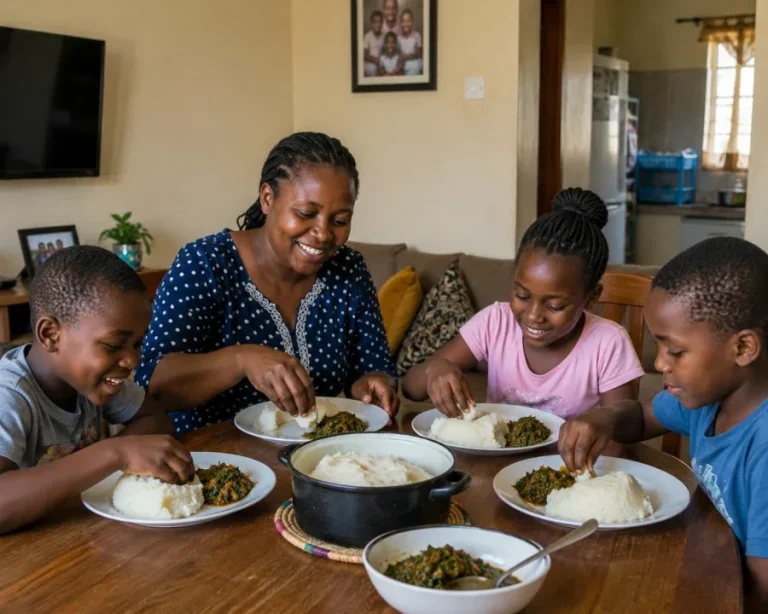

For most Kenyan households, maize flour is a daily purchase that rarely attracts much attention beyond price and brand preference. However, there is need to consider food safety and nutrition which are key for a healthy meal. It is as a result of this that Cereal Millers Association (CMA) launched their Chagua Safe. Chagua Smart Campaign.
The campaign is an initiative aimed at educating consumers about food safety, flour fortification and nutrition. It seeks to encourage households to look beyond price and brand preference when making a purchase and to better understand the role of safe and nutritious food in the family.
The debate surrounding maize flour in Kenya which is a staple food has shifted beyond affordability to concerns about food fortification and safety. This highlights the need for consumers to better understand not only what is added to flour, but also whether it meet the established standards.

“Every Kenyan family deserves access to information that helps them make informed decisions about the food they consume,” said CMA Chief Executive Officer Paloma Fernandes.
“Through Chagua Safe. Chagua Smart., we want to make food safety and nutrition part of everyday conversations in Kenyan homes. When consumers understand what is in their food and why it matters, they are better equipped to make choices that support healthier families and stronger communities.”
Maize remains the country’s most important staple food, with millions of households relying on ugali as a primary source of daily calories. This widespread consumption is one of the reasons Kenya introduced mandatory maize flour fortification in 2012.
Under the regulations, commercially milled maize flour is required to contain essential micronutrients including iron, zinc, folic acid and certain B vitamins. This is meant to address micronutrient deficiencies which affect large sections of the population leading to various lifestyle diseases.
Why it Matters
Nutrition experts argue that staple foods like ugali offer the most effective means for improving public health. This is because they reach large numbers of people without requiring significant changes in dietary habits.
Iron in the flour works to prevent anaemia, while zinc supports immunity and growth. Folic acid on the other hand is key to maternal health and child development. Due to the fact that maize flour is consumed by a majority of the population, fortification can be able to improve nutrition at a national level.
According to the Kenya Demographic and Health Survey, childhood stunting, undernutrition and micronutrient deficiencies remain significant public health concerns. This is more so among women and children hence the need for fortification.
Aflatoxins
While fortification focuses on adding nutrients, food safety concerns center on what may already be present in maize.
Aflatoxins which are toxic substances produced by fungi are one of the biggest food safety challenges facing the maize value chain. This is because contamination can occur during harvesting, drying, storage or even during transportation.
The fungi unfortunately can’t be detected without lab testing, which means that there is a high likelihood of consuming contaminated flour unknowingly. The CMA campaign aims to encourage Kenyans to understand the risks to their food safety and the importance of purchasing products that meet established standards.
Uneven Compliance
Although mandatory fortification has been in place for more than a decade, implementation has been uneven across the milling sector.We have a situation whereby large-scale millers have the equipment and systems
necessary to comply with fortification requirements. However, smaller millers face challenges due to equipment costs as well as lack of technical capacity.
At the same time, many consumers continue to purchase flour solely based on price without considering the nutrients or whether the flour is safe.
It is this lack of information that the “Chagua Safe. Chagua Smart” campaign seeks to tackle. They are doing this by encouraging consumers to pay closer attention to nutritients and safety standards when choosing the flour to buy.