
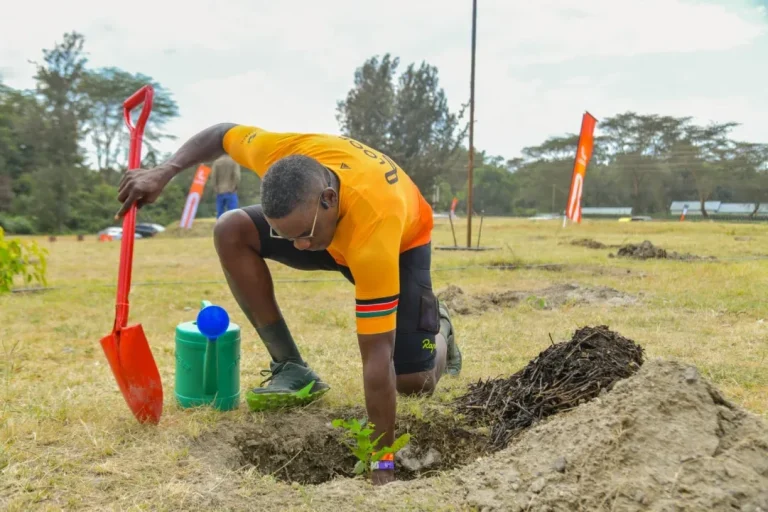

LOOP DFS a NCBA subsidiary planted 3,000 indigenous and adaptive trees at Flamingo Farm in Naivasha. This is part of its environmental conservation and climate action through the LOOP Safari Gravel Series.
The tree-planting exercise was held alongside the second leg of the LOOP Gravel Series 2026. The series attracted more than 2,000 participants, including 850 cyclists, spectators, partners and members of the local community. The initiative was carried out in partnership with Hell’s Gate management as part of ongoing efforts to restore ecosystems within the Naivasha landscape.
The exercise forms part of LOOP’s broader sustainability strategy, with tree planting now becoming a key feature of every edition of the LOOP Safari Gravel Series. The company says the approach is aimed at ensuring each event delivers a lasting environmental benefit alongside its sporting impact.

Speaking during the event, LOOP DFS CEO Eric Muriuki said, “Our tree-planting initiative within the Gravel Series reflects LOOP’s commitment to integrating sustainability into everything we do. By bringing together sport, community and environmental action through the LOOP Safari Gravel Series, we are not only creating memorable experiences but also taking deliberate steps to restore ecosystems and protect biodiversity.”
A representative from Hell’s Gate welcomed the partnership, noting that collaborations between the private sector and conservation stakeholders are critical in restoring degraded landscapes.
“Partnerships like this are essential to restoring our landscapes and protecting the ecosystems that sustain local communities. By planting indigenous and adaptive trees, this initiative will support biodiversity, strengthen climate resilience and contribute to the long-term health of the Naivasha environment.”
The 3,000 trees planted include indigenous and adaptive species such as Odo, Olive, Neem, Croton, Acacia, Melia azedarach and Syzygium. According to LOOP DFS, the species were selected for their ability to thrive in local conditions while supporting biodiversity, improving soil health and contributing to long-term ecosystem restoration.
As the trees mature, they are expected to provide habitats for birds and other wildlife, enhance biodiversity, capture carbon and strengthen the resilience of the Naivasha ecosystem against the effects of climate change.
The initiative highlights a growing trend among corporates to integrate sustainability into sporting events, using platforms such as the LOOP Safari Gravel Series to drive community participation while delivering tangible environmental outcomes.