
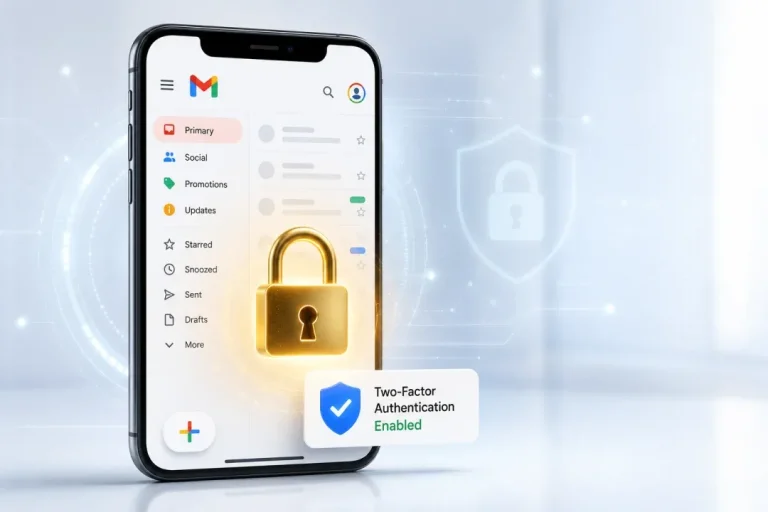

When most people think about banking security, they imagine PIN numbers, banking apps, ATM fraud, or suspicious phone calls pretending to be from the bank. However, rarely does anyone think about their email account. Yet today, cybercriminals increasingly see your personal email inbox as the easiest gateway into your finances.
For scammers, hacking your email can often be more valuable than stealing your ATM card. This is because once they gain access, they can quietly reset passwords, intercept banking alerts, access sensitive personal documents, and even drain accounts before victims realize that anything is wrong.
Why your email matters
Most banking platforms today are linked directly to email addresses. Your email is where banks send password reset links, OTP notifications, transaction alerts, monthly statements, verification requests and security warnings

If a cybercriminal is able to successfully compromise your inbox, they essentially gain visibility into your entire digital financial ecosystem. With the scary part being that many victims never realize their email has been hacked until money disappears from their account.
How scammers work
One of the most common tricks involves the “Forgot Password” feature. Once scammers gain access to your email account, they simply visit your banking platform, click “Forgot Password,” and request a password reset link.
Since they already control your inbox, they intercept the reset email, create a new password, and gain direct access to your account. From there, they can transfer money, apply for mobile loans, or even change your account recovery details.
Another tactic involves digging through your inbox for sensitive information. Cybercriminals often search for keywords like statement, bank, PIN, OTP, ID copy, KRA and utility bill.
Old emails containing scanned IDs, account statements, contracts, or transaction confirmations provide scammers with enough information. They then use it to impersonate victims or manipulate customer service representatives into granting further access.
In some cases, scammers even delete transaction alerts and banking emails from both the inbox and trash folder to delay detection. By the time victims notice, the money is already gone.
Warning signs
One of the earliest warning signs is suddenly stopping receiving emails normally. If important notifications mysteriously disappear or your inbox becomes unusually quiet, that could indicate someone has tampered with your account settings or forwarding rules.
Unexpected password reset emails are another major red flag. If you begin receiving password reset requests for accounts you never attempted to access, someone may already be testing your credentials.
Many email providers also send alerts whenever a new device logs into your account. Never ignore notifications showing logins from unfamiliar cities, countries, or devices.
And sometimes, the clearest evidence is sitting right inside the “Sent” folder, emails you never wrote, or suspicious communication sent from your account without your knowledge.
Why Kenyans are vulnerable
One major issue is password reuse. Many people still use the same password across email, mobile banking, social media, and e-commerce platforms.
That means if scammers compromise one platform through phishing, data leaks, or fake websites, they can potentially unlock multiple accounts at once.
Another challenge is poor email hygiene. Years of old statements, ID copies, contracts, and confidential financial records often remain sitting inside inboxes unprotected.
For cybercriminals, that information becomes a goldmine.
How to protect yourself
The good news is that protecting yourself does not require advanced technical knowledge.
Two-Factor Authentication (2FA)
This is the single most important step. With 2FA enabled, logging into your email requires both your password and a second verification code sent to your phone or authentication app.
Even if scammers steal your password, they still cannot access your inbox without the second layer.
Strong and unique passwords
Your email password should never match your banking password or social media passwords. Avoid predictable combinations like birthdays, phone numbers, or names.
Long passphrases are often safer and easier to remember.
Clean your inbox regularly
Endeavor to delete old emails containing bank statements, ID documents, PIN information, utility bills and sensitive financial records. If scammers ever gain access, do not leave behind a complete roadmap to your financial life.
Be cautious of suspicious calls
Fraudsters increasingly impersonate banks and customer care agents. Remember: legitimate banks will never ask for your email password, PIN, or OTP over the phone.
For example, Equity Bank advises customers that official calls only come through verified channels such as 0763 000 000. If someone pressures you to share confidential information urgently, hang up immediately.
The reality is that cybersecurity today goes far beyond protecting bank accounts directly. Your email account has become the central control room for your digital identity, financial access, and personal information.
As cybercrime becomes more sophisticated, scammers are increasingly targeting the weakest link in the chain not the bank’s systems, but the customer’s inbox. Protecting your email may very well be the simplest step you can take to protect your money.