
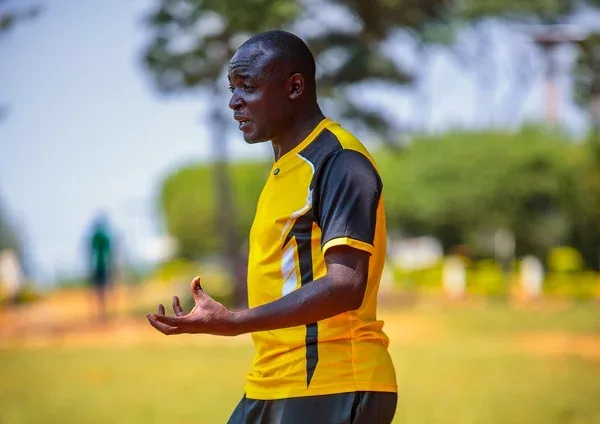

For Francis Muhambe, popularly known as Coach Franco, football is about more than winning matches and collecting trophies. It is about identifying young talent, nurturing potential and helping players find opportunities that can change their lives.
A Kiswahili and History teacher at Vihiga High School in Vihiga County, Franco has built a reputation as a grassroots football coach with an eye for overlooked talent. Through school and community teams, he has helped young players develop their skills, gain exposure and pursue opportunities in professional football and education.
He currently coaches Vihiga Cranes, the school’s football team, where he combines teaching, mentorship and talent development. His approach is guided by the belief that football can provide young people, particularly those from disadvantaged backgrounds, with opportunities for better livelihoods.

“I get satisfaction when I see my players grow and watch them on television, either playing for local clubs, the national team or international clubs,” he says. “What matters to me is what happens to the player and how far they go.”
A passion that started in school
Franco’s coaching journey began long before he took charge of competitive teams. While a student at Kilingili Secondary School, he discovered his ability to organize players and make tactical decisions.
Whenever the school principal, who also doubled up as the football coach, was unavailable, Franco was entrusted with organising training sessions and guiding his classmates during inter-class competitions.
His teams recorded several wins, earning him the nickname “Kochare”, derived from the word coach. At home, he was also known as “Captain Fantastic” because of his ability to select players, organise teams and make tactical decisions.
His growing passion for football, however, was not initially shared by everyone. His father wanted him to concentrate on his education, but his uncle, Andrew Opati, recognised his commitment to the game and helped persuade his father to support his ambitions.
Determined to learn more about football, Franco went beyond playing and organising school matches. He sometimes cycled between 23 and 30 kilometres from Vihiga to Kisumu to watch training sessions at Moi Stadium.
He also studied the coaching philosophy of former Arsenal manager Arsène Wenger, particularly his emphasis on developing technical ability from an early age.
“That philosophy shaped my approach to coaching,” he says.
Building teams through a distinct football philosophy
As his experience grew, Franco began applying his ideas to grassroots and school football. While working with Valley Strikers in Vihiga, he introduced a possession-based style that emphasized accurate passing, ball control and keeping possession. The team’s approach attracted comparisons with Spanish football club Barcelona, eventually inspiring a change of name.
Over the years, he has coached several teams, including Olbolosat Secondary School, Ol Joro Orok Secondary School in Nyandarua County, Luanda Villas, Madira Soccer Assassins, Ebwali Boys Secondary School and Nyamira Girls in Bondo.
His achievements include guiding Olbolosat Secondary School to the East Africa Secondary Schools Sports Association Games in 2018. He helped Ebwali Boys reach the national secondary school games in 2019.
He has also participated in local tournaments, Talanta Hela competitions, school games and the Safaricom Chapa Dimba tournament. His involvement in Chapa Dimba has been particularly notable.
In 2023, he guided Ebwali Boys to the Western Regional title following a 1-0 victory over Bungoma’s Compel Sportif. Austin Odongo scored the decisive goal, securing Ebwali a place in the national finals in Kisumu.
He also guided Madira Soccer Assassins towards the Western Regional finals, although the girls’ team could not participate because of a scheduling clash with school games in Rwanda.
After joining Vihiga High School, Franco set about building Vihiga Cranes from scratch. He recruited players, developed the team and entered it into Chapa Dimba.
The team went on to defeat his former side, Ebwali Boys, in the county finals before progressing to the regional stage. He has also guided Nyamira Girls to the Siaya County title.
These achievements reflect his ability to develop competitive teams while working with young players at different stages of their football journeys.
Taking grassroots talent to bigger stages
For Franco, one of the most rewarding aspects of coaching is seeing players move from local competitions to bigger football platforms. Several players who have passed through his coaching journey have gone on to represent professional clubs, national teams and pursue opportunities abroad.
Among them are Harambee Stars players Austin Odongo and Derrick Okech, Shabana FC’s Justice Munika and Valerie Nekesa, who has represented Kenya and played for Spanish side CD Tenerife Femenino. His list also includes Jane Hatto and Rebecca Kwoba, who have pursued football and scholarship opportunities in the United States.
In 2025, four players associated with his coaching journey were selected for the Safaricom Chapa Dimba All-Stars team that travelled to Spain. The trip provided them with international exposure and an opportunity to experience a different level of football.
For Franco, these achievements demonstrate the value of grassroots competitions in identifying players who might otherwise remain unnoticed. He believes that talent is widely distributed, but opportunities to develop and showcase it are not always accessible to everyone.
This is why he takes scouting seriously, often travelling to areas such as Khwisero, Vihiga and Lugari to watch local matches and identify promising players. Rather than relying solely on established school competitions, he looks for players who may have limited exposure but demonstrate the potential to develop.
He often watches a player several times before making a decision. Promising candidates may then be invited to train with his team for two to three weeks, allowing him to assess their consistency, response to coaching and ability to work with others.
Developing players from the basics
Franco’s coaching philosophy places technical development ahead of physical conditioning and tactical complexity. He believes players must first learn how to control, manipulate and use the ball effectively before progressing to more demanding aspects of the game.
“I believe I cannot work on the physical aspect of a player without first working on their technical ability,” he explains. “Most of the boys and girls I get are not necessarily gifted from the beginning; they are players I have to mentor.”
This approach is particularly important when working with young players who may have talent but lack access to structured football development.
His coaching journey has also involved formal training. With sponsorship from former Luanda MP Chris Omulele, he undertook Confederation of African Football (CAF) D coaching training before progressing to CAF C training in 2023, following his success with Madira Soccer Assassins.
The training has helped strengthen his understanding of player development and provided a formal foundation for his coaching ambitions.
Teaching life lessons
Being both a teacher and a football coach has given Franco a unique perspective on the responsibilities that come with mentoring young people.
At Vihiga High School, his role extends beyond preparing players for competitions. He also has to ensure that they remain committed to their academic responsibilities and understand the importance of discipline.
He acknowledges that balancing the different roles can sometimes be challenging, particularly when players have to recognise the distinction between their coach, teacher and mentor.
“Sometimes you are their father figure, sometimes you are playing and laughing with them, but the next morning you may have to discipline them for reporting late for morning preparations,” he says.
“They must understand when Franco is their teacher, when he is their coach and when it is time to celebrate as a team.”
He also incorporates life skills into his training sessions, emphasising teamwork, responsibility and respect. For him, developing a footballer means preparing a young person to become a responsible member of society, regardless of whether they eventually secure a professional contract.
“You do not just want to produce a player who can score goals but cannot live well with other people,” he says. “Teamwork on the pitch is closely connected to how we live with others in society.”
The challenges facing grassroots football
Despite his achievements, Franco recognises that developing young footballers requires more than technical knowledge and commitment. Limited playing facilities, inadequate equipment and the cost of transporting players to matches remain major challenges for grassroots teams.
These constraints can prevent teams from organising friendly matches and participating in competitions. This ultimately limits the exposure young players need to improve and attract the attention of scouts.
While he acknowledges the support of Vihiga High School’s management, he believes that greater investment in grassroots football infrastructure and development programs would help more young players progress. His ambition is to establish a fully-fledged football academy catering for children under the age of 13 and 15.
The proposed academy would provide structured early training, identify promising players and prepare them for opportunities with professional clubs and other institutions. However, registration requirements and logistical challenges remain among the hurdles he must overcome.
Beyond establishing the academy, Franco hopes to become a certified professional coach and contribute further to grassroots football development in Kenya.
Measuring success by the lives changed
For Franco, the ultimate measure of coaching success is not the number of trophies displayed in a cabinet. It is the progress made by the players who have passed through his hands.
He believes coaches have a responsibility to nurture talent and help young people turn their abilities into opportunities for themselves and their families.
“God gives a player talent, but when that player comes into your hands, you must understand that you have a responsibility to help them grow,” he says.
“If a player becomes a professional, earns a living through football and is able to support themselves and their family, then I believe I have succeeded.”
From the student nicknamed Kochare to a coach developing talent across Western Kenya, Franco’s journey illustrates the role grassroots coaches play in shaping the future of young footballers.
His story is also a reminder that behind many successful players are coaches who identify their potential early, invest their time in developing their abilities and provide guidance when opportunities seem limited.