
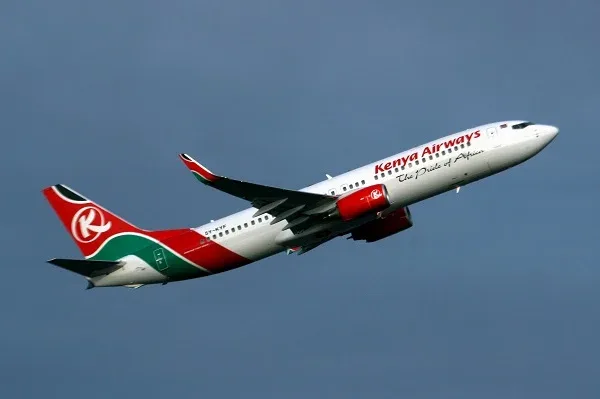

Kenya Airways is positioning itself to become a regional aircraft maintenance hub as Africa’s aviation industry expands. This will create opportunities to retain billions of shillings currently spent on aircraft servicing outside the continent.
African airlines spend an estimated USD 1.8 billion (KSh234 billion) annully on aircraft maintenance abroad, according to the African Airlines Association. Much of this money goes to maintenance facilities in Europe, the Middle East and Asia due to limited capacity for specialized aircraft repairs and component overhauls within Africa.
The opportunity to reverse this trend is significant. Boeing’s 2026 Commercial Market Outlook projects that Africa’s aviation services market will be worth USD 140 billion (approximately KSh18.2 trillion) between 2026 and 2045. Aircraft maintenance alone is expected to account for USD 90 billion (KSh11.7 trillion) of this market.

The projections come as demand for air travel across Africa continues to rise. Passenger traffic is expected to grow by an average of 5.8 per cent annually through to 2045, while the continent’s commercial aircraft fleet is projected to more than double from 755 aircraft in 2025 to 1,625 by 2045.
African airlines are expected to take delivery of approximately 1,165 new aircraft over the same period, increasing demand for maintenance, repair and overhaul (MRO) services.
However, the limited availability of specialized maintenance facilities means African carriers continue to rely heavily on foreign providers. Thereby increasing operating costs and reducing the amount of economic value retained within the continent.
Sending aircraft abroad for maintenance also creates operational challenges for airlines. Aircraft taken out of service for extended periods affect fleet availability, while logistics costs and delays in securing maintenance slots can disrupt flight schedules.
This presents an opportunity for countries with established aviation infrastructure and technical expertise to develop local maintenance capabilities and serve airlines across the continent.
Kenya Airways is positioning itself to play a bigger role in this market through its engineering and maintenance operations in Nairobi.
The national carrier has more than 700 technical specialists and already provides specialized maintenance services to at least 28 customer airlines across Africa.
Its engineering capabilities have also continued to expand. In a recent milestone, Kenya Airways engineers completed their first in-house landing gear replacement on an aircraft, a complex procedure involving a component weighing approximately six tonnes.
The achievement followed years of technical preparation and training, highlighting the level of engineering expertise required to undertake specialized aircraft maintenance locally.
Expanding these capabilities could allow Kenya Airways to serve more airlines seeking maintenance services within Africa, while reducing reliance on facilities outside the continent.
For Kenya, the opportunity extends beyond supporting its national carrier. Developing a competitive aircraft maintenance industry would create demand for specialised engineering skills, support aviation-related businesses and generate employment.
However, building this capacity will require sustained investment in infrastructure, equipment and technical training.
Boeing estimates that Africa will need approximately 25,000 additional aircraft maintenance technicians between 2026 and 2045 to support the expansion of its aviation industry.
This creates an opportunity for Kenya to strengthen its technical training institutions and produce more internationally certified aircraft maintenance engineers.
As the number of aircraft operating across Africa increases, the availability of qualified technicians and specialised maintenance facilities will become increasingly important to airlines seeking to manage costs and improve operational efficiency.
The challenge for Kenya will be to translate its existing aviation infrastructure and engineering expertise into a larger regional business.
By Dalmas Okendo, Head of Government Affairs