
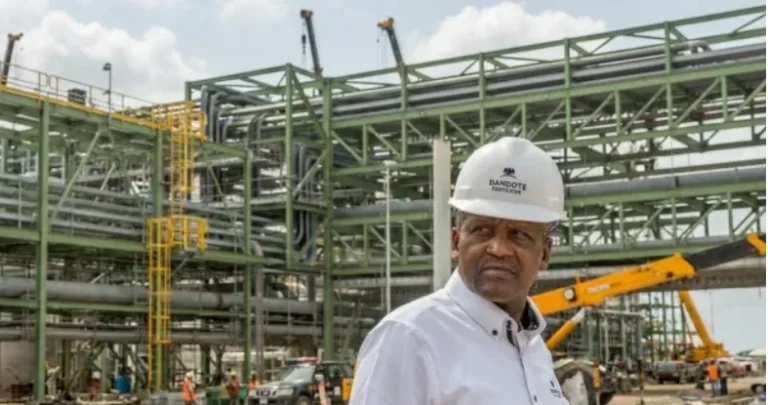

Kenya is set to embark on one of its most ambitious industrial projects, with Dangote Industries planning a 700,000-barrel-per-day oil refinery and petrochemical complex at Lamu.
Estimated to cost between $15 billion and $17 billion (about Sh2 trillion-Sh2.2 trillion), the project could have an impact far beyond the production of petrol and diesel. It could create a new industrial ecosystem around Lamu, support manufacturing, generate thousands of jobs and position Kenya as a regional petroleum and petrochemical hub.
Construction is expected to take about three years, with operations targeted around 2029-30, subject to financing, engineering and other project requirements.

A refinery built for the regional market
At full capacity, the Lamu refinery will process about 700,000 barrels of crude oil every day, equivalent to roughly 255 million barrels annually. This is significantly larger than Kenya’s domestic fuel requirements, meaning the refinery would have to serve a wider regional market.
The project is expected to supply petroleum products to countries across East Africa. These include Uganda, Tanzania, Rwanda, Burundi, South Sudan, Ethiopia and the Democratic Republic of Congo, turning Lamu into a potential regional energy hub.
The refinery is expected to produce petrol, diesel, jet fuel, LPG, propylene, base oils and bitumen. This will create opportunities for several industries beyond fuel distribution.
Petrochemicals
One of the biggest economic opportunities could come from the petrochemical industries built around the refinery.
Propylene, for example, can be used to manufacture polypropylene, a major raw material for plastics, packaging, pipes, automotive components and consumer products. This will support the growth of local manufacturers who currently import many of their raw materials.
The complex will also support chemical and fertiliser manufacturing, providing inputs for agriculture and other industries. While the exact downstream plants are yet to be fully defined, the availability of locally produced petrochemical feedstock could make it easier for investors to establish manufacturing operations around Lamu.
Other potential industries include:
- Plastics and packaging, supplying food, beverage, pharmaceutical and consumer-goods companies.
- Lubricant manufacturing, using locally produced base oils for automotive and industrial products.
- Bitumen production, supplying road construction and maintenance projects.
- LPG businesses, including storage, distribution and retail.
- Aviation fuel supply, supporting Kenya’s growing aviation and logistics industries.
The result could be a value chain running from crude oil to refined products, petrochemicals and finished manufactured goods.
Industrial hub
The refinery will be developed in the Lamu Special Economic Zone which is alongside Lamu Port and the wider LAPSSET corridor. This gives it access to maritime transport and potential regional trade routes.
The proposed infrastructure includes an eight-berth marine facility, a possible Lokichar-Lamu crude pipeline and about 1,000MW of power generation capacity.
This infrastructure is expected to attract additional investors to the area, including chemical manufacturers, plastics companies, logistics firms, warehouses and other industrial businesses.
Instead of the refinery operating as a standalone facility, Lamu will gradually develop into an industrial cluster centred on energy, manufacturing and logistics.
Jobs
The project is expected to create about 60,000 direct and indirect jobs. This figure, however, covers the wider project and associated economic activity rather than permanent positions at the refinery alone.
During construction, demand will rise for engineers, technicians, welders, equipment operators, drivers, construction workers, contractors and other skilled and semi-skilled workers.
Once operational, the refinery and petrochemical facilities will require a specialized workforce covering chemical and mechanical engineering, laboratory operations, maintenance. As well as electrical and instrumentation work, environmental management, ICT, safety and logistics.
There will also be indirect jobs in transport, hospitality, retail, housing, security, professional services and other businesses serving the growing industrial centre.
Reducing reliance on imported fuel
Kenya currently relies heavily on imported refined petroleum products. Refining the fuel locally could retain more value within the domestic economy and reduce reliance on overseas refining capacity.
However, the refinery would still require large quantities of crude oil. Kenya’s current crude production is nowhere near enough to supply a 700,000-barrel-per-day facility, meaning the project would depend on crude from regional producers and international markets.
Government revenue
Because the refinery is significantly larger than Kenya’s domestic market, exports will be central to its business model.
Petroleum products and petrochemicals could be shipped through Lamu Port or distributed to neighboring countries. This will generate foreign-exchange earnings and increasing activity in shipping, logistics, insurance, banking and other services.
The project could also expand government revenues through corporate taxes, employment-related taxes, port charges and broader economic activity.
Economic impact
The real opportunity for Kenya is therefore not simply to have another source of petrol and diesel. It is to develop an oil-to-industry value chain.
Crude oil will enter through Lamu, be refined locally, and provide feedstock for plastics, chemicals, packaging, lubricants and other manufacturing industries. These products could then serve Kenya’s domestic market and be exported across East Africa.
This will help deepen Kenya’s manufacturing base while creating new opportunities for local suppliers, contractors and investors.