
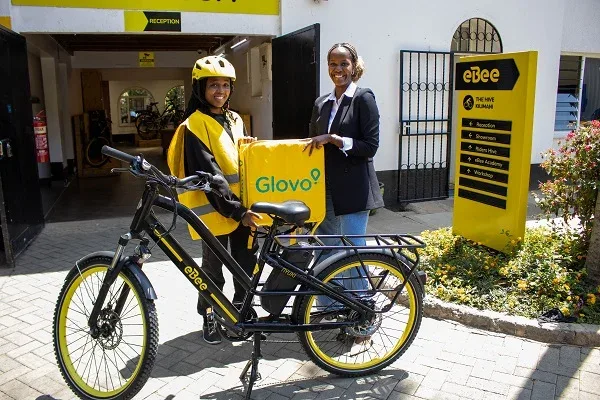

Glovo has partnered with African e-mobility company eBee to train and onboard more women as delivery riders in Kenya. This is as the platform seeks to increase female courier participation from 1% to 5% over the next year.
The initiative, dubbed ‘She Delivers’, will give participants practical rider training through eBee before they join the Glovo platform. The first cohort consists of 16 women.
Glovo currently works with more than 2,500 active couriers in Kenya each day, but women account for only a small share of its rider base. The new program is designed to address some of the barriers that have limited women’s participation in delivery work. This includes access to vehicles, riding skills, safety concerns and perceptions that courier work is largely suited to men.

“Unlocking the full potential of Kenya’s gig economy requires intentionally dismantling the structural and financial barriers facing female workers,” said Liz Wambua, Head of Operations, Glovo Kenya.
“‘She Delivers’ is a core business strategy to build a more inclusive, resilient, and sustainable logistics ecosystem. By pairing eBee’s clean mobility technology with Glovo’s platform reach, we are creating a scalable model for women to build independent incomes while setting a new benchmark for gender parity in urban last-mile delivery across the region.”
Under the program, eBee will train participants on electric bicycle handling, defensive riding, road safety. As well as basic maintenance, navigation and delivery-platform readiness. The training is intended to give the women the skills and confidence needed to operate independently once they begin making deliveries through Glovo.
The participants will use electric bicycles, which also reduces some of the costs associated with conventional motorcycles while supporting the shift towards cleaner forms of urban transport.
Maarten Fonteijn, Managing Director of eBee Africa, said electric bicycles can make delivery work more accessible to women by reducing the physical demands and operating costs associated with last-mile mobility.
“Electric bicycles remove heavy physical exertion and lower operating expenses, making last-mile delivery a genuinely viable, high-earning opportunity for women,” said Fonteijn.
“Partnering with Glovo allows us to advance gender equity while accelerating the shift toward clean, zero-emission urban transport.”
For women looking to enter the delivery sector, access to suitable transport and the skills to use it safely can be significant barriers.
Yvonne Muribi, one of the riders in the initial cohort, said the combination of e-bikes and structured training has helped address some of those challenges.
“Access to e-bikes and structured safety training removes the biggest hurdle to joining this sector,” said Muribi. “It gives us the confidence to navigate traffic safely and build an independent income on our own terms.”
The ‘She Delivers’ program comes as Kenya’s digital and gig economies continue to create alternative income opportunities. However, female participation remains relatively low in some areas of the sector.
Glovo and eBee intend to use lessons from the initial program to develop financing options for e-bike access, improve safety infrastructure and create targeted onboarding channels for women.
The companies expect these measures to help expand the program beyond the initial 16 participants. It will also support Glovo’s target of raising the proportion of women couriers on its Kenyan platform to 5% over the next year.
The initiative also gives Glovo an opportunity to test how electric mobility can be incorporated into a more inclusive last-mile delivery model. This is particularly as businesses and riders look for ways to manage the cost and environmental impact of urban deliveries.