
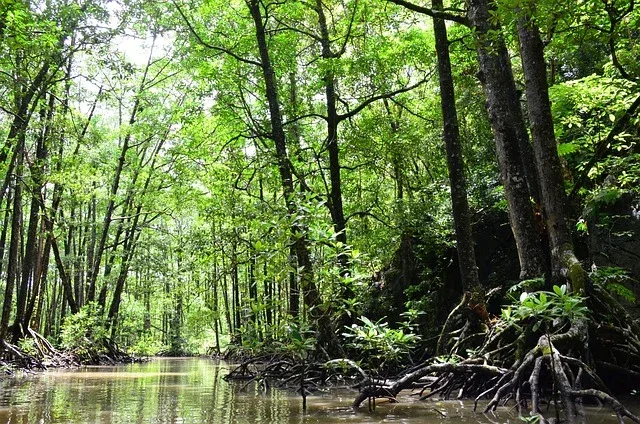

I&M Foundation has partnered with Furaha & Baraka Farms (FBF) to ensure that more than 1.5 million additional mangrove trees planted in Kwale County by the end of 2026.
The initiative builds on an ongoing restoration program that has already delivered impressive results, positioning it among Kenya’s most ambitious community-led coastal conservation projects.
Under the partnership, I&M Foundation will support the planting of 1,563,000 mangrove seedlings. This is expected to expand efforts to restore degraded coastal ecosystems while creating employment and livelihood opportunities for local communities.

The restoration program is being implemented by Furaha & Baraka Farms in partnership with the Mwatsumbo Community Forest Association (CFA) and the Kenya Forest Service (KFS). This combines community participation, conservation expertise and financial support to restore critical mangrove forests along Kenya’s coastline.
The project has already demonstrated strong progress. Between June and December 2025, partners planted 678,500 mangrove seedlings across approximately 70 hectares within the Mwache Block in Kwale County. Independent field monitoring conducted in May 2026 found that about 624,503 trees had survived, representing a 92 per cent survival rate a strong indicator of the project’s long-term viability.
Building on that success, a further one million mangrove seedlings were planted between January and July 2026, significantly expanding restoration efforts across the coastal ecosystem.
Dorine Nalo, Head of the I&M Foundation, said the initiative reflects the Foundation’s commitment to supporting community-driven solutions that deliver both environmental and social impact.
“At I&M Foundation, we believe that lasting impact is achieved by investing in locally led solutions that address real community needs. We recognize the importance of protecting natural ecosystems while creating opportunities for communities to thrive. Through this partnership with Furaha & Baraka Farms, we are supporting a project that delivers measurable environmental impact, strengthens climate resilience and creates sustainable livelihoods for local communities.”
Mangrove forests are widely regarded as one of the world’s most valuable natural ecosystems. Besides protecting coastlines from erosion, they serve as breeding grounds for marine life, support fisheries and capture significantly more carbon than many terrestrial forests, making them a critical tool in addressing climate change.
For Kenya, restoring mangrove forests is also central to broader environmental conservation efforts and the country’s climate adaptation commitments.
Daniel Mwero, Founder and Executive Director of Furaha & Baraka Farms, said the project demonstrates how environmental restoration can generate lasting economic benefits for communities.
“Healthy ecosystems and thriving communities go hand in hand. This partnership enables us to build on the progress already achieved by working alongside local communities and conservation partners to restore Kenya’s coastal mangrove forests.”
He added that the initiative advances several United Nations Sustainable Development Goals (SDGs), including Climate Action, Life Below Water, Life on Land, and Decent Work and Economic Growth, while embracing circular economy principles that ensure communities directly benefit from conservation activities.
“Our model is built on the principles of a circular economy, ensuring that the value generated through ecosystem restoration flows back to local communities through direct employment, skills development and livelihood opportunities. By investing in both people and nature, we are creating measurable environmental impact while strengthening community resilience and sustainable economic growth.”
Nature-based climate solutions such as mangrove restoration are increasingly attracting investment from governments, development partners and the private sector. This is as countries seek practical ways to combat climate change while supporting biodiversity and creating green jobs.