
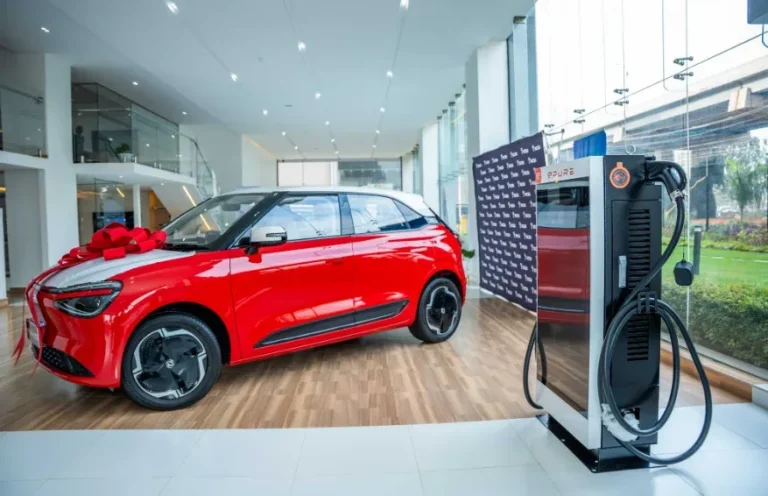

NCBA Bank and ePure Motion have partnered to make EV ownership more accessible to individuals, public transport operators and fleet businesses. This is due to the fact that as electric vehicles become popular, the high upfront cost remains the biggest hurdle to ownership.
The two companies have launched a strategic collaboration that combines vehicle financing with charging infrastructure and aftersales support. This creates a more complete ecosystem for customers considering the switch to electric mobility.
Under the partnership, salaried customers purchasing ePure Motion passenger electric vehicles for private use can access up to 100% financing. Repayment periods will be up to 72 months, subject to credit assessment and approval.

The financing package also targets Kenya’s public transport sector, where electric mobility is steadily gaining traction. Individual members of Public Service Vehicle (PSV) SACCOs purchasing 16-seater electric matatus can qualify for up to 80% financing over a repayment period of 48 months. Existing SACCOs and PSV companies may access up to 90% financing with repayment terms of up to 60 months, depending on eligibility and credit approval.
Beyond vehicle financing, the partnership includes preferential financing terms during the campaign period, dealer support on processing costs, flexible insurance options for selected customers and integrated fleet financing that can incorporate EV charging infrastructure. The approach is intended to address several of the barriers that have slowed electric vehicle adoption in Kenya.
NCBA Group Director of Asset Finance and Business Solutions, Lennox Mugambi, said the partnership aligns with the bank’s strategy of supporting sustainable transport through innovative financing solutions.
According to Mugambi, NCBA’s asset finance business currently commands more than 30% market share, positioning the lender to play a leading role in financing Kenya’s transition to cleaner transport. He said making electric vehicles more affordable for individuals, SACCOs and fleet operators will help transform the country’s transport sector while lowering long-term operating costs for customers.
Chief Executive Officer Dr. Gilbert Saggia said widespread EV adoption depends on creating an ecosystem where customers can access the vehicle, financing, charging infrastructure. As well as servicing and aftersales support through a single integrated offering. That model, he noted, is essential if electric mobility is to move beyond early adopters and into the mainstream.
The partnership comes at a time when Kenya is increasingly positioning itself as a regional leader in electric mobility. Rising fuel prices, growing environmental awareness and supportive investments in charging infrastructure have encouraged businesses and public transport operators to explore electric alternatives.
Financial institutions are also beginning to play a larger role in accelerating adoption by developing financing products tailored specifically for electric vehicles rather than conventional asset finance.
For NCBA, the agreement builds on its broader strategy of financing sustainable mobility solutions. Earlier this year, the bank also partnered with Salvador Caetano Kenya to expand financing for electric and conventional vehicles, signalling a continued focus on supporting the country’s transition to cleaner transport.