
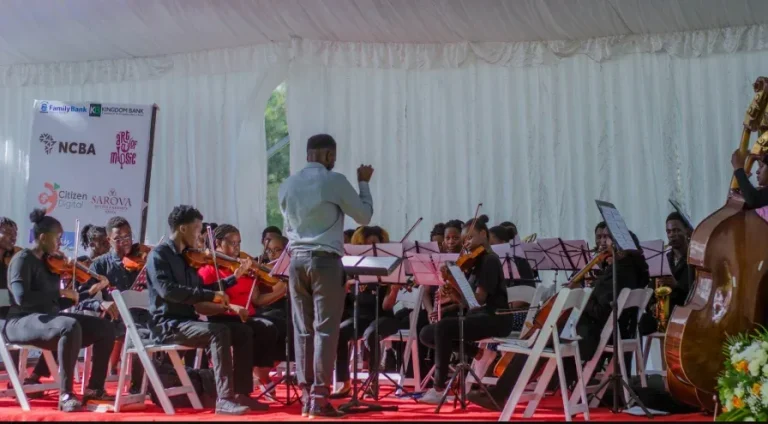

For more than 15 years, Ghetto Classics has used music to create opportunities for children growing up in Nairobi’s informal settlements. Through classical music training, education support and mentorship, the organization has helped thousands of young people build better futures. Its recent charity golf tournament at Migaa Golf Club in partnership with NCBA Bank, marked another step in expanding those opportunities.
In this interview, Catherine Mueni, an event consultant with Ghetto Classics who coordinated the tournament, explains how music, education and golf are helping transform young lives.
What is Ghetto Classics and why was it established?
Ghetto Classics is a charity initiative that uses classical music to impact the lives of children living in informal settlements. The organization operates centres in Mukuru and Korogocho informal settlements, where young people receive music training and educational support.

The program was established through the Art of Music Foundation in 2009 by founder Elizabeth Njoroge. It uses music education to provide the youth with opportunities to better themselves and the community. They do this by instilling in them the life skills that come with the discipline of studying music. The program also enables the beneficiaries to earn a living by employing former students as teachers.
Beyond music, Ghetto Classics also sponsors children’s education, with some former beneficiaries now pursuing careers in medicine, architecture and other professions.
How many young people have benefited?
Since it began, more than 3,000 young people have been impacted by the Ghetto Classics program. Currently, approximately 1,500 children and young adults continue to receive support through music training and educational sponsorship.
According to Mueni, many children join the program while still in primary school and continue receiving support through secondary school and university.
“Once Ghetto Classics takes up a child, the organization supports them throughout their educational journey, including university education,” she says.
How did the partnership with NCBA come about?
Ghetto Classics approached NCBA while seeking corporate partners to support its first charity golf tournament. The funds raised were intended to support operations at the Mukuru and Korogocho centres and help fund education program for participating children.
“The amount we collected will go towards supporting the children’s program and the operations of the centres,” Mueni says.
Why was exposing the children to a golf environment important?
For many of the young performers, the tournament at Migaa Golf Club was their first visit to a golf course.
Mueni says the experience had an important psychological impact.
“The children felt welcome in these spaces. They realized that these are places they can access and belong to,” she says.
She adds that the exposure helped break down social barriers that often prevent young people from lower-income communities from seeing themselves in certain environments.
“They also realized that golf is open to everyone. They can learn the game, participate in junior programs and understand that these opportunities are not reserved for only a few people.”
The experience also motivated participants to encourage other children from their communities to join the program.
How can music and sports work together?
Mueni believes sports, particularly golf, have become important fundraising platforms that can support social causes.
“Many people view golf as a luxury sport, but it has increasingly become a platform for supporting initiatives such as education, mental health and the arts,” she says.
Sport creates opportunities for people from different backgrounds to come together and support causes like Ghetto Classics that may otherwise struggle to attract funding.
What life skills do participants gain?
Beyond musical ability, Ghetto Classics teaches important life skills. Learning and playing music instills discipline, confidence and teamwork for these kids, things they would not ordinarily have learnt given their environment.
“Music requires patience and discipline. Many of the children come from environments where they face numerous challenges, and the program helps them develop structure and focus,” Mueni said.
She notes that the program helps young people understand that they can build successful futures without turning to crime or negative influences.
The Ghetto Classics orchestra has performed at numerous high-profile events, including performances attended by international dignitaries and members of royalty. These experiences help participants learn how to engage confidently with people from different backgrounds and social settings.
Are there success stories from the program?
Mueni points to several former participants whose lives have been transformed through Ghetto Classics.
One example is a former participant named Abigail Bosco, who joined the program as a young child and later progressed through school with support from the organization. She is currently pursuing a medical degree in the United Kingdom.
The organization says many other former beneficiaries are studying both locally and internationally, while others have established careers in different professions.
What does success look like for the partnership with NCBA?
The charity golf tournament was the first of what Ghetto Classics hopes will become an annual event.
Mueni says the organization would like to continue working with NCBA and expand the partnership in the coming years.
“This event was organised within a short period, but NCBA still came on board and supported us. We appreciate that support and look forward to future editions.”
For Ghetto Classics, success ultimately means supporting more children.
“The more children we can sponsor through education and the more opportunities we can create, the more successful the partnership becomes,” she said.
The organisation hopes future partnerships will help more children progress from informal settlements to universities, careers and opportunities they may never have imagined possible.