

For the longest time, environmental conservation has largely been framed as a moral obligation towards future generations. However, a partnership between NCBA and Boreka is changing this narrative by showing that protecting the environment can also generate income and create jobs.
NCBA started its partnership with Boreka in 2023 with the belief that environmental restoration and economic empowerment can go hand in hand. Since its inception, the initiative has planted 340,000 trees across the country, directly engaged 642 farmers. They have also trained more than 1,000 farmers in sustainable agroforestry practices and created over 400 green jobs.
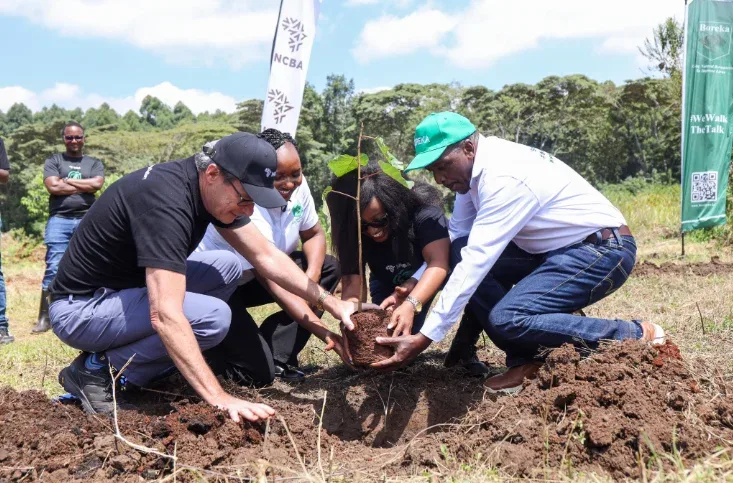
During this year’s World Environment Day celebrations, the two organizations planted 300 indigenous trees at Kamwaki Coffee Estate in Limuru. This brought the total number of trees established at the estate to about 3,000. The exercise was part of NCBA’s broader ambition of growing 10 million trees by 2030.

Other than planting trees, the partnership invests in farmer training, stewardship and monitoring to ensure that trees survive to maturity. Boreka indicated that the survival rates of their trees is approximately 70 to 75 per cent which is significantly higher than Kenya’s estimated national average of between 30 and 40 per cent.
Climate Awareness
According to Boreka Group CEO Esther Mutuma, the organization’s role extends far beyond distributing seedlings. In partnership with NCBA, Boreka actively trains farmers on climate change, helping them understand both the environmental and economic importance of restoring ecosystems.
“We work with farmers on climate matters. We educate them on climate change and help them understand why planting trees matters not just for the environment, but also for their livelihoods,” she explained.
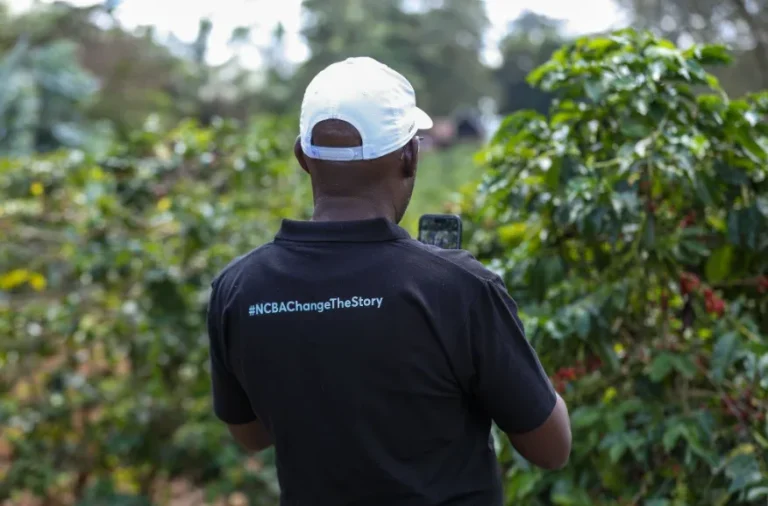
@insiderkenya On World Environment Day, we joined @NCBA Bank Kenya as they planted trees in Kamwaki Coffee Estate in partnership with @Boreka group who enable farmers to monetize environmental restoration by trading carbon credits. So far, NCBA has been able to plant 340,000 trees, trained 1,000 farmers and created 400 green jobs. #NCBAChangeTheStory #GoForIt ♬ original sound – InsiderKenya
The training focuses on how trees absorb carbon dioxide from the atmosphere. Thus, making them an important tool in addressing climate change while creating opportunities for communities to participate in carbon projects.
So far, Boreka has reached more than 1,500 farmers across Kiambu, Kwale and Kitui counties. Whereby they have equipped them with knowledge on sustainable land management and the emerging opportunities within the carbon credits economy.
According to Boreka, this has resulted in a noticeable shift in attitudes with farmers increasingly taking ownership of the trees they plant. This is due to the understanding that their long-term care has an impact on the environment as well as financial returns.
Carbon Credits
The most transformative aspect of the initiative is the introduction of farmers to the carbon credits markets. Carbon credits are generated when activities such as tree planting remove carbon dioxide from the atmosphere. These credits can then be sold to organizations seeking to offset their emissions.
For Kenyan farmers, this presents an opportunity to diversify income streams from the usual crops while creating a positive impact to the environment.
At Kamwaki Coffee Estate, farmer Sue Gichuki indicated that as landowners she had resisted the temptation to convert agricultural land into real estate developments. As such, she was optimistic that carbon markets will finally reward their decision to keep the farm for future generations.
“What will my children inherit from me? Will it be buildings? How many houses can people live in? It’s only one at a time,” she remarked during the World Environment Day celebrations.
Ensuring Farmers Benefit
One of the persistent criticisms of carbon markets globally has been concerns over whether local communities receive a fair share of the benefits.
In Kenya, recent legal reforms have sought to address this by guaranteeing landowners and participating communities a defined portion of revenues generated from carbon projects.
Boreka says it intends to go even further by committing to returning 60 per cent of carbon revenues to participating farmers. This is significantly above the government’s minimum requirement of 40 per cent.
“We believe the farmer should benefit the most because the land is theirs, the labor is theirs, and the responsibility of taking care of the trees rests with them. Our role is to aggregate them, organize them and connect them to opportunities.” she said.
This approach is helping build trust in a sector that many rural communities have previously viewed with skepticism. By ensuring that farmers understand how carbon credits work and how revenues are shared, Boreka is simplifying what has traditionally been a complex and inaccessible market.
Monitoring for Success
One of the lessons Boreka has learned is that planting trees is only the beginning. Monitoring has emerged as a critical pillar of successful carbon projects.
According to Esther Mutuma, real-time monitoring enables project implementers to track tree growth, identify challenges early and improve survival rates. The data collected allows farmers and project partners to verify that trees remain healthy and continue delivering the environmental benefits required for carbon credit generation.
It also strengthens transparency and accountability, two factors that are increasingly important in global carbon markets. This focus on monitoring has contributed to improved tree survival and behavioral change among participating farmers.
Creating Green Jobs
The initiative has created more than 400 green jobs through nursery management, seedling distribution, monitoring and maintenance activities. These employment opportunities are particularly significant in rural communities where youth unemployment remains a challenge.
The program also strengthens climate resilience due to the fact that agroforestry systems improve soil health, support pollination and enhances water retention. Farmers also become better equipped to withstand climate shocks while improving the productivity of their land.
The partnership between NCBA and Boreka illustrates how financial institutions can become catalysts for sustainable development. Since launching its 15 Sustainability Commitments in 2023, NCBA has planted more than 1.4 million trees through various partnerships and mobilized KSh9.5 billion in green and sustainable financing.
By supporting initiatives that combine conservation, farmer education and income generation. NCBA is helping create an ecosystem where sustainability has started to being viewed as an investment. This is key in ensuring that more players get on board which has the potential of creating a major ripple effect in the conservation of our environment.