
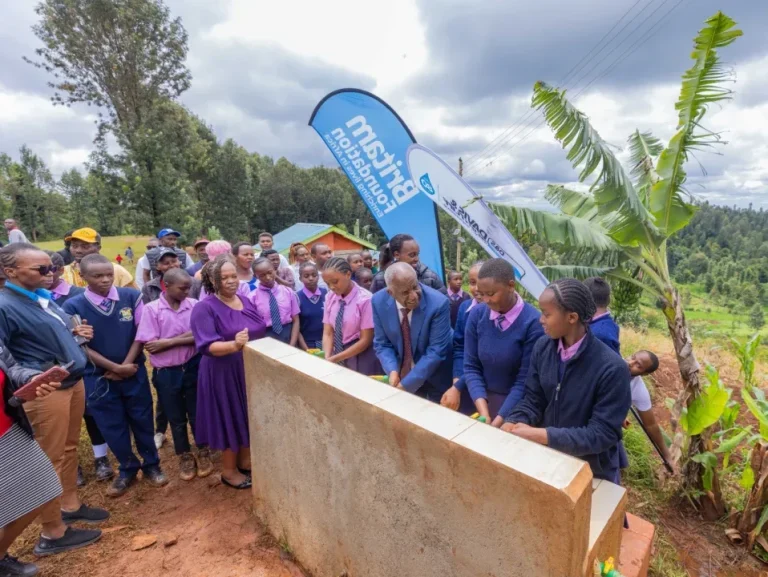

Britam Foundation has partnered with Davis & Shirtliff to commission solar-powered water projects at Theri Primary School and Murang’a School for the Hearing Impaired. This is in a bid to improve access to clean water in learning institutions while promoting renewable energy use.
The initiative is designed to address water shortages in rural schools, a challenge that often disrupts learning and exposes students to health risks linked to unsafe water sources.
At Theri Primary School, head teacher Susan Macharia said the new system will significantly improve hygiene and support daily school operations, including agriculture lessons under Kenya’s Competency-Based Education curriculum.

“This project will go a long way in supporting the education of children. Now that we have access to clean water, we can prevent waterborne diseases such as typhoid and cholera. The learners can also focus on their studies without the worry of going to the river to fetch water to clean their classrooms,” she added.
At Murang’a School for the Hearing Impaired, which serves more than 300 learners, the partners handed over a solar-powered borehole aimed at cutting both water shortages and high operational costs. The school had previously relied on electricity-powered systems, leading to elevated utility bills.
School head Mr. Mashuria said the transition to solar energy has already reduced electricity costs by up to 75 per cent, freeing up resources for other pressing school needs while giving learners practical exposure to renewable energy technology.
Britam Foundation Board Chairman Dr. Peter Munga said the project aligns with the Foundation’s broader mission of strengthening education outcomes by creating enabling environments for learners.
“Education remains one of the most powerful tools for transforming communities. Through initiatives such as this, we want to create an environment where learners can thrive and fully focus on their studies,” said Dr. Munga.
The commissioning events also included tree planting exercises in both schools as part of Britam Foundation’s environmental sustainability agenda.
The projects fall under the Foundation’s flagship water programme, which has so far impacted more than 90,000 learners and community members across 70 schools in Kenya, Uganda, Tanzania and Rwanda through solar-powered boreholes and hygiene education initiatives.