
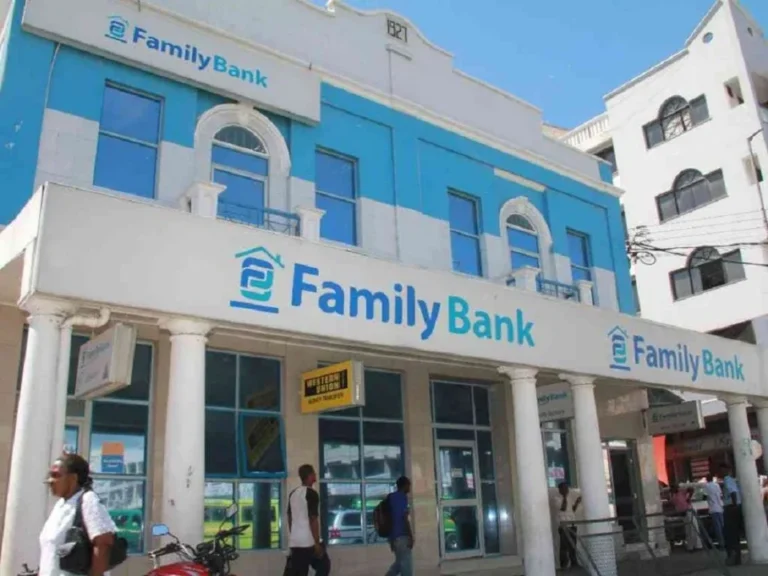

Family Bank has recorded a 15.4% increase in Profit Before Tax to KES 1.5 billion for the first three months of 2025, up from KES 1.3 billion recorded last year.
The rise in profitability was on the back of a 32.6% rise in Net interest income to KES 3.2 billion Net interest income. This was driven by a 50.6% growth in interest income on Government securities and a 14.1% increase in interest income on loans. Total non-funded income grew by 32.1% supported by increase in number of customers’ transactions, improved digital offering and increased products uptake.
On the other hand, operating expenses increased by 41.5% to Ksh. 3.1 Billion, primarily driven by a 59.6% rise in loan loss provisions and moderate growth of 10.9% in staff costs. The increase in staff costs was largely attributed to branch optimization initiatives and continued investments in employee training and capacity building.

Total assets rose by 19.2% to KES 174.0 billion, driven by a 10.1% growth in the loan book which stood at KES 96.2 billion and a 3.3% increase in investment in Government securities.
Customer deposits grew by 19.8% to KES 132.3 billion, supported by the Bank’s branch optimization strategy alongside continued investments in digitization and customer experience enhancements aimed at expanding financial access.
Family Bank CEO Nancy Njau, said, “This is the first quarter of our new strategic plan, and these results are a reflection of our strategic clarity and the strong relationships we continue to build with our customers as we focus on sustaining long-term shareholder value. Our new 2025–2029 strategy prioritizes innovation, digital transformation, customer-centricity, data-driven decision-making, and sustainable growth. We are positioning Family Bank as the Preferred Bank for Biashara, an approach anchored in a refined segmentation strategy, with a strong focus on the retail and SME sectors, enabling us to meet our customers evolving needs.”
Core capital stood at KES 15.9 billion, up from KES 14.0 billion while core capital ratio stood well above regulatory thresholds at 13.22%. Signalling strong capital adequacy in light of the progressive core capital requirements. This liquidity ratio also remained robust at 46.9% underscoring the Bank’s strong balance sheet and capacity to meet short-term obligations.