
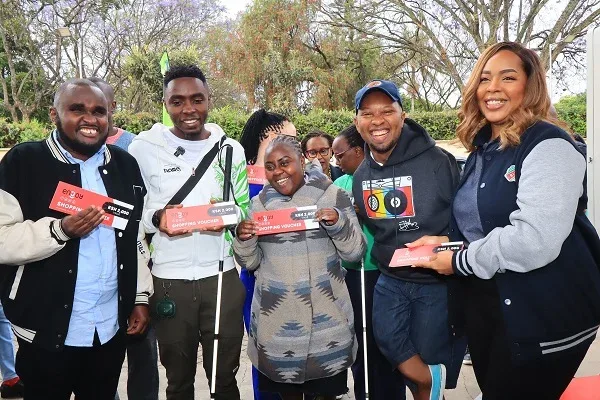

What does it mean to experience Kenya when seeing is not the only way to experience a destination? That is the question which the Kenya Beyond Sight campaign seeks to answer. It brings together KCB Bank, RUBiS Energy Kenya and the Kenya Tourism Board (KTB) to explore the country through a different lens.
The five-day journey involves six creators, J-Supercharge, Denno Music, Sammy Brayo, Nancy Cosy, Chelah Richards and Delvin Obara. They will be taken through destinations in Eastern Kenya and the Coast, documenting what it means to experience tourism from different perspectives.
The campaign is also intended to challenge perceptions around disability and tourism. This is while drawing attention to the need for more accessible travel experiences across the country.

Rather than focusing only on what a destination looks like, the creators will explore Kenya through its sounds, tastes, textures, people and experiences. Thereby bringing a more multi-sensory approach to destination storytelling.
Seeing Kenya differently
Kenya’s tourism marketing has traditionally relied heavily on its visual appeal. From wildlife and beaches to landscapes and cultural attractions, much of the country’s tourism story is built around what visitors can see.
Kenya Beyond Sight seeks to change the narrative, through their social media platforms and media storytelling, the creators will share their experiences along the journey. They will also highligh both the opportunities and practical challenges that people with disabilities can encounter when travelling.
KCB Group Director, Marketing & Communication, Rosalind Gichuru said the campaign reflects the bank’s “For People. For Better” brand purpose.
“Kenya Beyond Sight is a practical expression of what our brand purpose For People. For Better means,” Gichuru said.
She said the initiative would encourage a more inclusive way of experiencing Kenya while challenging the tourism industry to think differently about how the country’s attractions are presented.
Accessibility is becoming part of the tourism conversation
For many travellers, accessibility can determine whether a destination is realistically available to them. Accommodation, transport, attractions, restaurants and other tourism facilities all play a role in shaping the experience.
The campaign therefore brings together several players across the tourism ecosystem. KTB is facilitating the journey and has worked with the Kenya Wildlife Service to secure complimentary access to Malindi Marine National Park.
The tourism board has also connected the team with Accessible Travel Kenya. They have designed the itinerary around the group’s accessibility requirements and will provide transport for the Coast leg of the trip.
KTB will also support destination marketing, storytelling and media engagement during the journey. The creators will additionally visit Haller Park, with complimentary access provided by Bamburi Cement.
KTB CEO June Chepkemei said the country’s tourism story should be accessible to everyone.
“As the Kenya Tourism Board, we believe that our destination must be accessible, welcoming and enjoyable to all visitors,” Chepkemei said.
She noted that Kenya’s tourism offering extends beyond its landscapes to its cultures, hospitality and experiences, arguing that the story should include people regardless of age or ability.
The campaign, she added, gives the industry an opportunity to consider how accommodation providers, attractions, transport operators and tour companies can make it easier for more visitors to explore and participate.
A journey supported by partners
The trip is also designed to demonstrate how different players in the tourism ecosystem can contribute to the travel experience.
RUBiS Energy Kenya will support the travelling team through its network of service stations along the route. The company is covering fuel costs for the journey and providing Enjoy Shop vouchers that the travelers can use for snacks, refreshments and other essentials.
For KCB, the journey will also provide an opportunity to showcase its digital payment solutions.
Gichuru said the creators will use KCB Debit and Prepaid Cards for cashless payments covering expenses such as accommodation, transport, dining and entry fees at attraction sites.
The aim is to demonstrate how digital payments can reduce some of the friction associated with travelling, particularly when moving between different destinations and services.
Inclusive tourism
The conversation around accessibility is taking place against the backdrop of a tourism industry that remains an important contributor to Kenya’s economy.
According to the World Travel & Tourism Council’s 2026 Economic Impact Research. Travel & Tourism contributed US$12.7 billion to Kenya’s economy in 2025, equivalent to 9.3% of GDP, while supporting 1.8 million jobs.
As the sector expands, making tourism accessible to a wider section of the population has implications beyond individual travel experiences. More accessible attractions, accommodation, transport and services can open up opportunities for more people to participate in tourism. This is while supporting businesses and jobs across the wider value chain.
For KCB, the campaign also aligns with its broader shared-value agenda and the Sustainable Development Goals. This is particularly SDG 8 on Decent Work and Economic Growth, SDG 10 on Reduced Inequalities and SDG 17 on Partnerships for the Goals.
But perhaps the most important part of Kenya Beyond Sight will be what happens after the five-day journey. By putting travelers with disabilities at the center of the tourism story, the campaign could prompt a wider conversation among tourism operators about what it actually takes to make a destination accessible.