
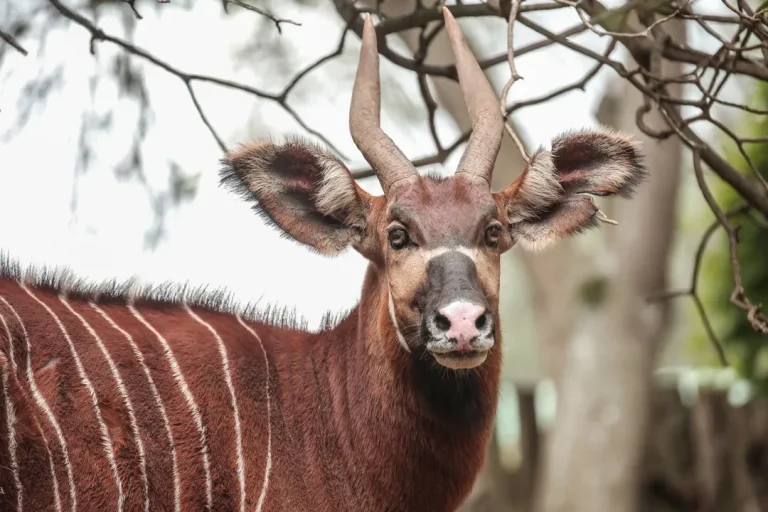

Four critically endangered mountain bongos have been flown back to Kenya by KLM Royal Dutch Airlines as part of an ongoing programme to rebuild the species’ population in the wild.
The four male antelopes were transported from the Czech Republic to Kenya under a conservation mission dubbed Return of the Bongos to Kenya. The animals were moved to the Mount Kenya Wildlife Conservancy, which is leading efforts to breed and gradually reintroduce mountain bongos into their natural habitat.
The mountain bongo, scientifically known as Tragelaphus eurycerus isaaci, is native to Kenya and remains one of the country’s most endangered large mammals. Conservation estimates show that only 66 individuals remain in the wild as of 2025, down from around 150 in 2021.

The decline has largely been linked to habitat loss, poaching, disease, and pressure on forest ecosystems where the species naturally occurs.
This latest transfer is intended to strengthen Kenya’s population through the introduction of genetically valuable animals bred in European zoological institutions.
The operation was carried out in partnership with the Kenya Wildlife Service, Mount Kenya Wildlife Conservancy, and the European Association of Zoos and Aquariums.
The four bongos were selected after assessments covering health, age, and genetic suitability. Each animal travelled in a custom-built transport stall designed to support welfare standards during transit.
This is the first time mountain bongos from European breeding programmes have been returned to Kenya under a structured rewilding plan.
Mount Kenya Wildlife Conservancy is working towards building a population of 750 fully rewilded mountain bongos by 2050. The four animals are expected to support breeding efforts before eventual reintroduction into protected habitats.
Mountain bongos are found in Kenya’s montane forests, particularly around central Kenya, including areas near Mount Kenya. Population numbers have fallen steadily over the years despite captive breeding efforts outside Kenya.
Conservation groups see rewilding as a necessary next step in rebuilding stable wild populations. Returning animals with diverse genetic profiles helps reduce inbreeding risks and improves long-term breeding outcomes.
While four animals will not materially change wild population numbers in the short term, the transfer adds to a longer-term recovery programme already underway in Kenya.
KLM facilitated the transport as part of its wildlife logistics operations, working alongside Air France–KLM Martinair Cargo.
Moving endangered animals by air involves veterinary oversight, regulatory approvals, route planning, and cargo adjustments designed for live animal transport.
Pier Luigi Vigada, Regional Director for East and Southern Africa and the Indian Ocean at Air France-KLM Martinair Cargo, said, “This operation demonstrates what is possible when aviation and conservation work hand in hand. We are proud to support a mission that contributes directly to the survival of one of Africa’s most iconic and endangered species.”
KLM has supported similar wildlife transport operations before. In 2024, the airline transported two lions and four servals to South Africa after the animals were rescued from circuses and wildlife trafficking operations in France.
Joris Holtus, Air France-KLM’s General Manager for East and Southern Africa, Nigeria and Ghana, said, “As an airline group, we are vividly aware of the greater purpose that global connectivity serves. That’s why, whenever we receive a call to support conservation initiatives like the transfer of the mountain bongos and lions, we do respond without hesitation.”
The focus now shifts to acclimatisation, breeding, and long-term rewilding. The four bongos will be integrated into Kenya’s conservation programme before contributing to future reintroduction efforts.
For Kenya’s conservation sector, the transfer represents a practical step in rebuilding one of the country’s rarest species through coordinated breeding, habitat management, and international partnerships.